


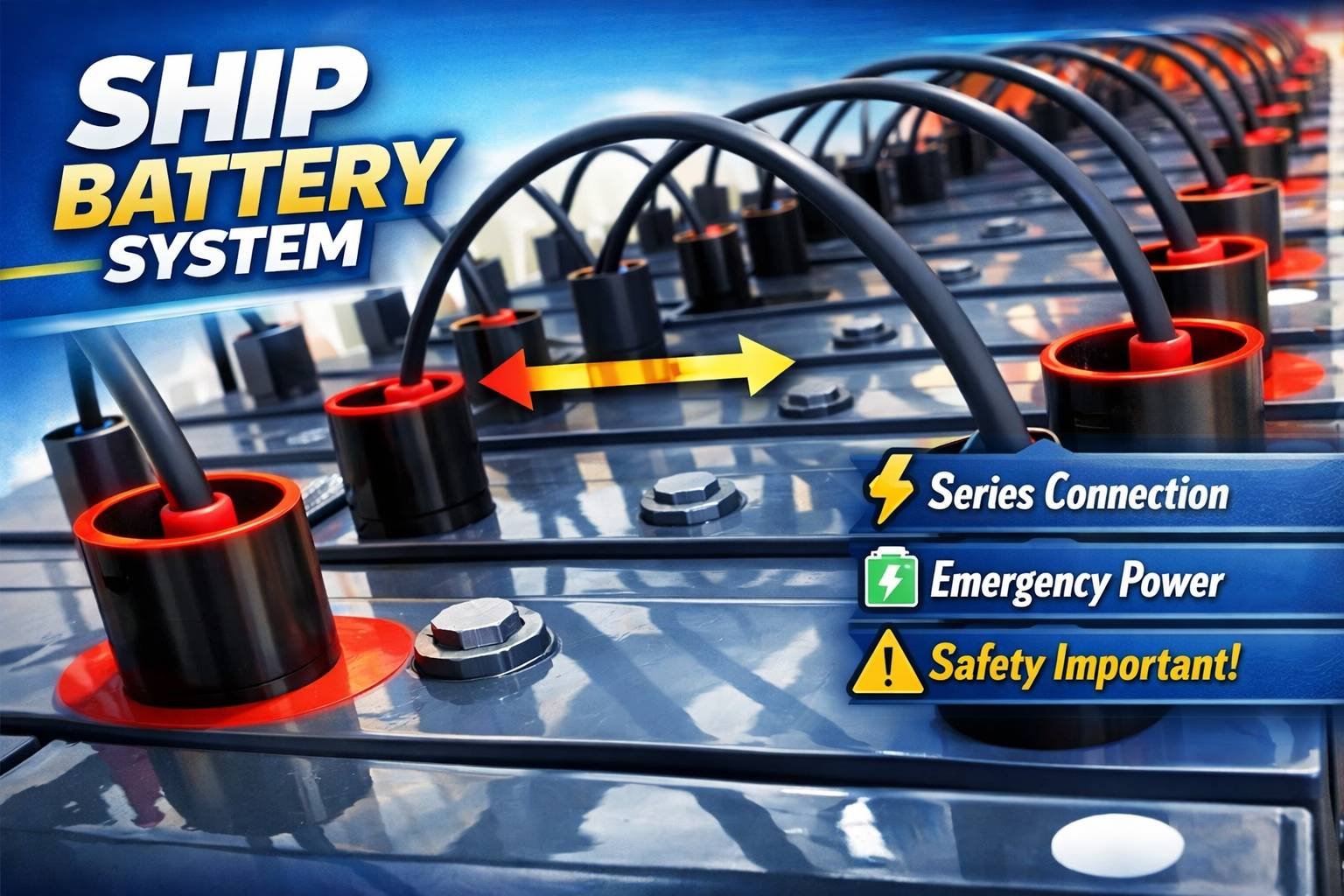
A lead acid cell is a secondary (rechargeable) electro-chemical cell which converts chemical energy into electrical energy during discharging and electrical energy into chemical energy during charging.
Main Parts
- Positive plate (Anode during discharge): Lead dioxide (PbO₂)
- Negative plate (Cathode during discharge): Spongy lead (Pb)
- Electrolyte: Dilute sulphuric acid (H₂SO₄ + H₂O)
- Vent plug: Releases gases (H₂ and O₂) during charging

Working of Lead Acid Cell
During Discharging
Chemical energy → Electrical energy
External load is connected. Current flows from positive (PbO₂) to negative (Pb) terminal. Both plates gradually convert into lead sulphate (PbSO₄). Electrolyte strength decreases (specific gravity reduces).
Chemical reactions
At Anode (+):
PbO₂ + H₂SO₄ + 2H⁺ → PbSO₄ + 2H₂O
At Cathode (−):
Pb + SO₄²⁻ → PbSO₄
Overall reaction
PbO₂ + Pb + 2H₂SO₄ → 2PbSO₄ + 2H₂O
2. During Charging
(Electrical energy → Chemical energy)
External DC supply is connected. Reactions reverse. Lead sulphate converts back to PbO₂ (positive plate) and Pb (negative plate).
Electrolyte concentration increases (specific gravity increases).
Hydrogen and Oxygen gases are released → vented out.
Chemical reactions
At Anode (+):
PbSO₄ + H₂O + SO₄²⁻ → PbO₂ + H₂SO₄
At Cathode (−):
PbSO₄ + 2H⁺ → Pb + H₂SO₄
Important Points
Nominal voltage of one cell ≈ 2 V
Specific gravity:
Fully charged ≈ 1.26–1.28
Discharged ≈ 1.18
Ventilation is essential to avoid explosion due to hydrogen gas.
Widely used in emergency power, UPS, ship batteries, starting systems.
Excess Charging
In case of excess charging, electrolysis of water takes place and causes the release of Hydrogen (H₂) and Oxygen (O₂) gases.
If the concentration of hydrogen in air reaches between 4% to 74%, the mixture becomes highly flammable and explosive.
Hence, proper ventilation is essential in battery rooms.
Lead Acid Cell
(Each Cell Voltage & Specific Gravity)
- Fully Charged Condition
Cell voltage: 2.0 V Specific gravity: 1.280
- Excess Charged Condition
Cell voltage: 2.2 V Specific gravity: 1.310
- Discharged Condition
Cell voltage: 1.8 V Specific gravity: 1.120
Ni-Cd Cell
Each Cell Voltage
- Normal cell voltage: 1.2 V
- Fully charged voltage: 1.5 V
Discharged voltage: 0.9 – 1.0 V

Battery (2nd) part
General Service Battery & Battery Room
SOLAS Regulation & Requirement
SOLAS Chapter II-1, Part ‘D’, Regulation 43
- General service battery room should be easily accessible.
- It should automatically come on load in case of failure of main power.
- The terminal voltage should not fall below 12% of rated voltage during the entire discharging period
Battery Room Requirements
- The battery room shall be designed in such a way as to prevent spillage of electrolyte and emission or spray.
- Batteries should be assembled in trays.
- Battery room lighting should be Ex ‘d’ rated (flame-proof).
- The battery room should have a proper ventilation system.
In case of forced ventilation, blowers/fans shall be non-sparking and Ex ‘n’ rated. - Batteries should not be installed in sleeping quarters.
- No naked light or open flame is permitted in the battery room.
- The floor of the battery room should be painted with acid- or alkali-resistant paint, and the coating should extend up to 150 mm on the side walls.
- Lighting and ventilation switches should be located outside the battery room.
- Safety equipment to be provided: Face shield Protective apron Eye-wash facility Plastic (non-metallic) containers
Battery Maintenance – Safety Procedure
- Inform C/E, 2/E and Bridge before starting work.
- Carry out Risk Assessment (RA) and Tool Box Talk (TBT).
- Obtain PTW (Permit to Work) and apply isolation, Lock-out / Tag-out (LOTO).
- Use appropriate PPE and insulated tools.
- Open the battery room door and wait 5–10 minutes for ventilation before entry.
- Switch on battery room lights.
- Enter the battery room and check for PPE and safety equipment availability.
- Visual inspection of battery for: Bulging Cracks Electrolyte leakage Loose or open terminals
- Check the condition of terminals and apply petroleum jelly if required.
- Ensure the vent is clean and unobstructed.
- Check electrolyte level and top up with distilled water if required.
- Check specific gravity of electrolyte using a hydrometer.
- Load / capacity test shall be carried out using an approved load tester.
Specification While Ordering a Battery
- Type of battery: Primary / Secondary
Lead-acid / Ni-Cd (maintenance-free or flooded)
- Battery capacity (Ah rating).
- Terminal voltage.
- Dimensions of battery (space availability).
- CCA – Cold Cranking Amperes.
- MCA – Marine Cranking Amperes.
CCA is the amount of current a 12 V lead-acid battery can deliver while maintaining a terminal voltage of at least 7.2 V for a minimum of 30 seconds at an ambient temperature of 0°F (–18°C).